A personal loan can be a helpful financial tool when used responsibly. It can smooth out cashflow during life events, cover urgent expenses, or help restructure debt into a clearer repayment plan. But many borrowers in Singapore run into trouble not because personal loans are “bad” — it’s because of small (and very common) mistakes made before signing the contract.
The good news is that most of these mistakes are avoidable. If you know what to look out for, a personal loan can remain manageable, predictable, and supportive of your longer-term finances.
Below are the top 10 mistakes borrowers make when taking a personal loan in Singapore — and what to do instead.
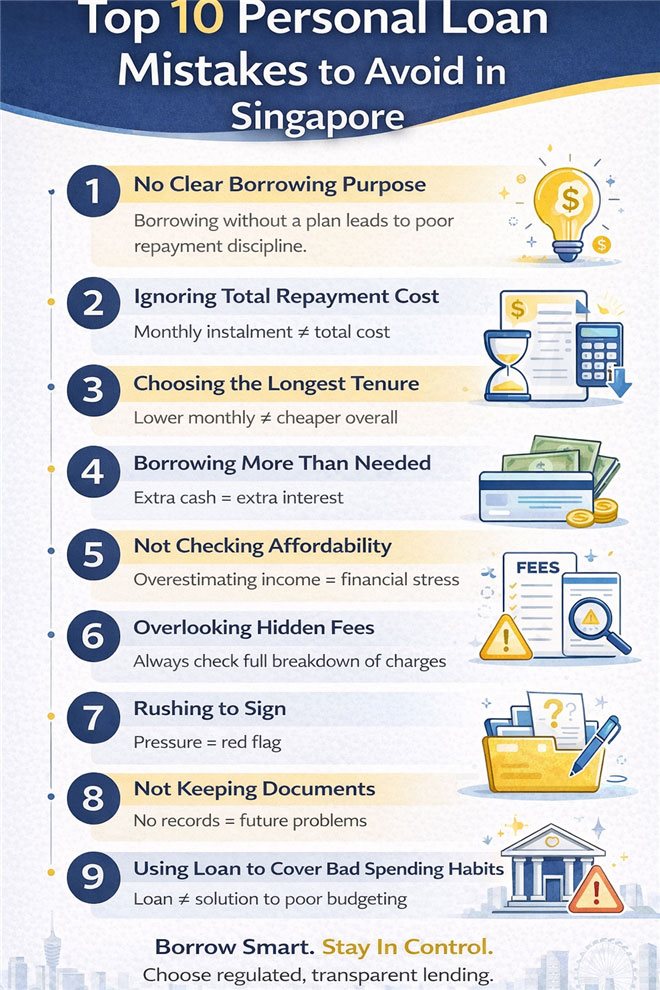
1) Borrowing without a clear reason (or plan)
One of the biggest mistakes is taking a loan simply because it’s available. A personal loan should solve a specific problem: consolidating high-interest debt, covering essential expenses, or managing a planned life event. If the purpose is vague, the repayment plan usually becomes vague too — and that’s where stress starts.
Do this instead: Write down what the funds are for, the exact amount needed, and how long you need to repay comfortably.
2) Focusing only on monthly instalments, not total cost
Many borrowers choose loans based on “I can afford $X a month,” without checking how much they’ll repay in total. A smaller monthly instalment can sometimes mean a longer tenure, which increases total interest paid.
Do this instead: Always ask, “What is the total amount I will repay?” and compare offers on total repayment, not just the monthly figure.
3) Taking a longer tenure than necessary
Long tenures feel safer because the monthly instalment is lower. But the longer the loan runs, the more interest you may pay overall. Borrowers sometimes lock themselves into long repayment periods when they could comfortably clear the loan faster.
Do this instead: Choose a tenure that balances affordability and speed. If you can handle a slightly higher monthly repayment without strain, you usually save money long-term.
4) Borrowing more than needed “just in case”
This is a very common trap. Borrowers add extra buffer “for emergencies,” then end up spending it casually because it’s sitting in the account. You then pay interest on money you didn’t actually need.
Do this instead: Borrow the amount required for the specific purpose, and keep an emergency fund separate if possible.
5) Ignoring existing commitments and cashflow reality
A personal loan repayment is not happening in a vacuum. It sits alongside rent/mortgage, bills, transport, insurance, family support, and lifestyle expenses. Borrowers sometimes overestimate what they can pay monthly, especially during busy seasons or income fluctuations.
Do this instead: Do a simple affordability check:
- What are your fixed monthly expenses?
- What are your variable expenses?
- What is your realistic leftover after essentials?
-
A good rule: your repayment should not force you into credit card debt again.
6) Not reading the full fee and charge breakdown
Some borrowers only look at the interest rate and miss other costs such as administrative fees, late fees, or penalties. With any loan, clarity matters. You should always understand what happens if repayment is late, and what fees apply.
Do this instead: Ask for the full breakdown in writing:
- Interest rate and how it’s calculated
- Any processing/admin fees
- Late payment charges
- Early repayment terms (if you want flexibility)
7) Signing too quickly under pressure
If a lender rushes you — “sign now,” “limited time,” “today only” — that’s a poor sign. Responsible lenders want you to understand your commitment.
Do this instead: Take a pause, read the loan contract, and ask questions. A legitimate lender will answer clearly and professionally.
8) Not keeping copies of loan documents and repayment records
This sounds basic, but it matters. Borrowers sometimes don’t keep their copy of the loan agreement or don’t track repayment receipts. When there’s confusion later, it becomes harder to clarify.
Do this instead: Keep a folder (digital is fine) with:
- Loan agreement
- Payment schedule
- Proof of each repayment
- Any written communication with the lender
9) Using a personal loan to “patch” recurring overspending
If the real issue is recurring lifestyle overspending or unstable budgeting, a personal loan may only delay the problem. Borrowers sometimes take a loan, then continue spending on credit cards, which creates two debt streams.
Do this instead: If debt is recurring, consider:
- Budget restructuring
- Consolidating high-interest debt into a single plan
- Reducing credit card usage while repaying
- A loan should be part of a bigger reset, not a bandage.
10) Choosing the wrong lender (or not verifying licensing)
This is the most important safety point. In Singapore, borrowing should only be done through regulated channels. If you borrow from an unlicensed party, you lose legal protections and risk harassment, hidden charges, and unsafe tactics.
Do this instead: Borrow only from licensed and reputable providers, and confirm the lender’s legitimacy before proceeding.
Final Thoughts
A personal loan can be a smart financial decision — or an expensive mistake — depending on how it’s chosen and managed. Most borrower problems don’t come from one big error; they come from small oversights: not comparing total cost, not checking affordability properly, or signing before fully understanding the terms.
If you want a personal loan that feels manageable, focus on clarity: borrow for a defined purpose, choose the right tenure, understand the full cost, and work with a regulated lender that prioritises transparency. That’s the difference between a loan that supports your life… and one that stresses you out.
📌 FAQ (Q&A) — Top 10 Mistakes Borrowers Make When Taking a Personal Loan in Singapore
Q: What is the biggest mistake people make when taking a personal loan?
A: Borrowing without checking the total repayment amount and without a clear repayment plan. Many borrowers focus only on monthly instalments and overlook the full cost over the loan tenure.
Q: Should I choose the lowest monthly instalment?
A: Not always. Lower instalments often come with a longer tenure, which can increase the total interest paid. It’s better to balance affordability with a reasonable repayment timeline.
Q: Is it okay to borrow extra “just in case”?
A: Generally, no. Borrowing more than you need means paying interest on money you didn’t actually require. A separate emergency fund is usually safer.
Q: What should I ask a lender before signing?
A: Ask for the full breakdown: interest calculation method, fees, late charges, total repayment amount, and whether early repayment reduces interest.
Q: How do I avoid borrowing from an unlicensed moneylender?
A: Verify the lender’s licence status before engaging and avoid unsolicited SMS/WhatsApp loan advertisements, which are common red flags.