July can be an expensive month for many Singapore households. Between school-related spending, mid-year outings, family meals, online shopping, utility bills, transport, groceries, and “small treats” that somehow become not-so-small, credit card bills can quietly pile up.
Then August arrives. The statement comes in. Suddenly, July does not feel so cute anymore.
If your credit card bill after July looks higher than expected, the most important thing is not to panic. The next most important thing is not to ignore it. Credit card debt becomes harder to manage when it is left to roll over month after month, especially if you are only making minimum payments.
MoneySense explains that if you pay your credit card bill in full and on time, you will not be charged interest. However, unpaid credit card debt can snowball, and minimum payments generally go towards paying interest charges first before reducing the outstanding balance.
This guide explains how to reset your budget after July, manage credit card bills responsibly, avoid worsening debt, and rebuild control before the year-end spending season arrives.
Why July Credit Card Bills Can Feel Painful
Credit card spending often feels manageable while it is happening because you are not paying cash immediately. The problem only becomes obvious when the statement arrives.
A July credit card bill may include:
- Dining out
- Food delivery
- School expenses
- Transport and private-hire rides
- Online shopping
- Family outings
- Utility payments
- Subscription renewals
- Groceries
- Instalment payments
- National Day preparation spending
The issue is not always one huge purchase. More often, it is many medium and small transactions stacked together. Your card statement becomes a group project where every expense contributed a little too enthusiastically.
This is why August is a good time to reset before the balance rolls further into September.
1. Open Every Credit Card Statement First
The first step is simple but uncomfortable: open every statement and look at the full amount.
Do not only check the minimum payment. Check:
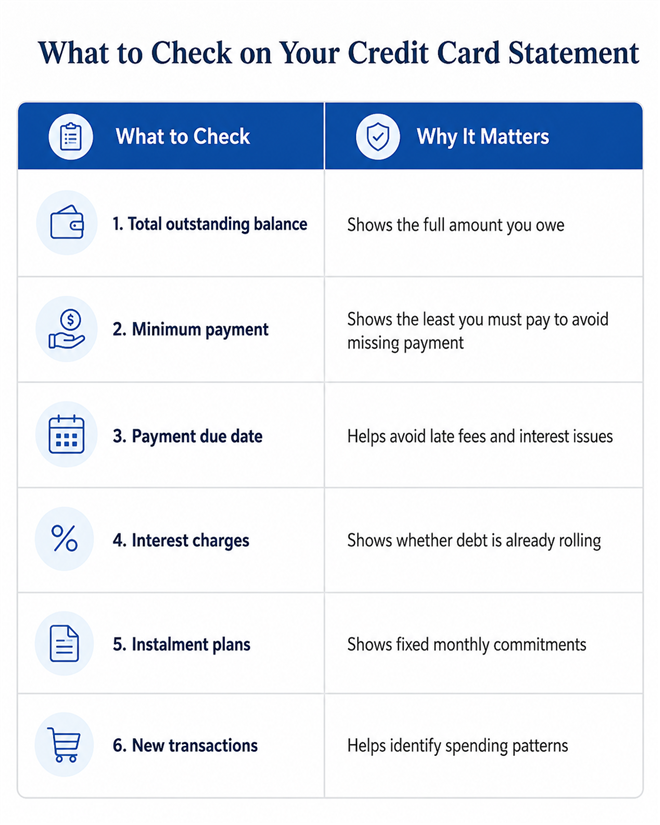
If you have more than one credit card, write everything down in one place.
Example:
| Card |
Outstanding Balance |
Minimum Payment |
Due Date |
| Card A |
S$ |
S$ |
|
| Card B |
S$ |
S$ |
|
| Card C |
S$ |
S$ |
|
You cannot fix what you refuse to count. Painful, yes. Necessary, also yes.
2. Separate Needs From Lifestyle Spending
Once you have your statement, go through the transactions and group them.
| Category |
Examples |
| Essential Spending |
Groceries, utilities, transport, school needs, medical bills |
| Adjustable Spending |
Dining out, delivery, shopping, beauty, entertainment |
| Debt-related Spending |
Instalments, balance transfers, cash advances, late fees |
| One-off Spending |
Gifts, repairs, family events, urgent purchases |
This helps you understand whether the bill came from unavoidable expenses or from spending habits that need adjustment.
For example, if most of your bill came from groceries, utilities, and school costs, your household budget may need more breathing room. If most came from dining, shopping, and delivery, the issue may be lifestyle leakage.
No judgement. The card statement is not there to shame you. It is there to expose the villains.
3. Pay More Than the Minimum If You Can
Paying only the minimum amount may keep the account from becoming overdue, but it does not solve the problem quickly. MoneySense notes that minimum payment goes towards interest charges first before reducing the outstanding balance, which means debt can take longer to clear if you only pay the minimum.
A better approach is:
- Pay the full balance if possible
- If not, pay as much as you reasonably can
- Avoid adding new non-essential spending
- Focus on reducing the outstanding balance quickly
Example:
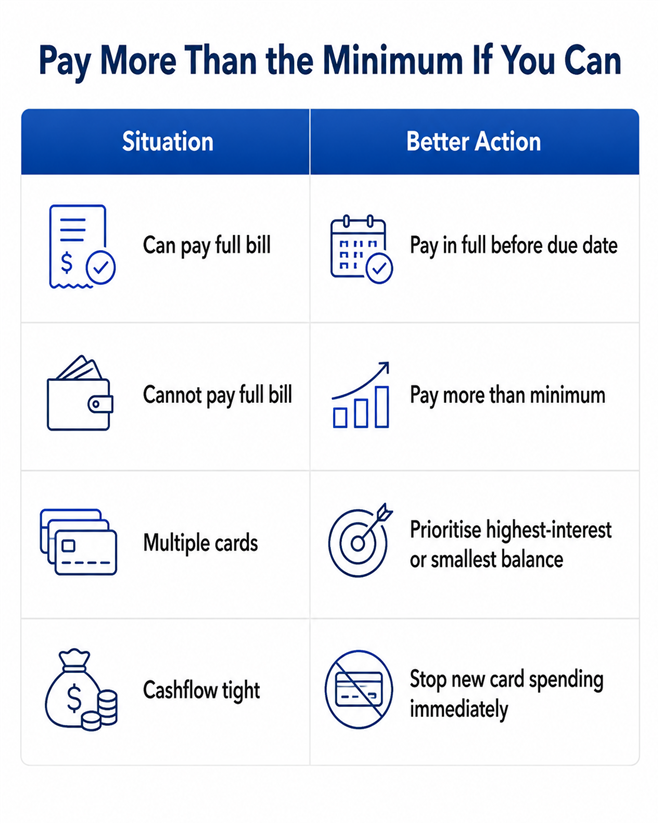
The goal is to prevent the balance from becoming a long-term problem.
4. Stop Using the Card Temporarily
If your credit card bill after July is already uncomfortable, pause card usage for at least 30 days.
This does not mean you are banned from life. It simply means you are stopping the leak while you repair the pipe.
For August, consider using:
- Debit card
- Cash
- PayNow
- A fixed weekly spending account
- A separate grocery budget
Avoid using the same credit card while trying to repay it. Otherwise, the balance keeps moving like a very annoying treadmill.
A temporary freeze helps you see your true cashflow again.
5. Build an August “Damage Control” Budget
After paying what you can towards the credit card, create a realistic August budget.
Start with essentials:
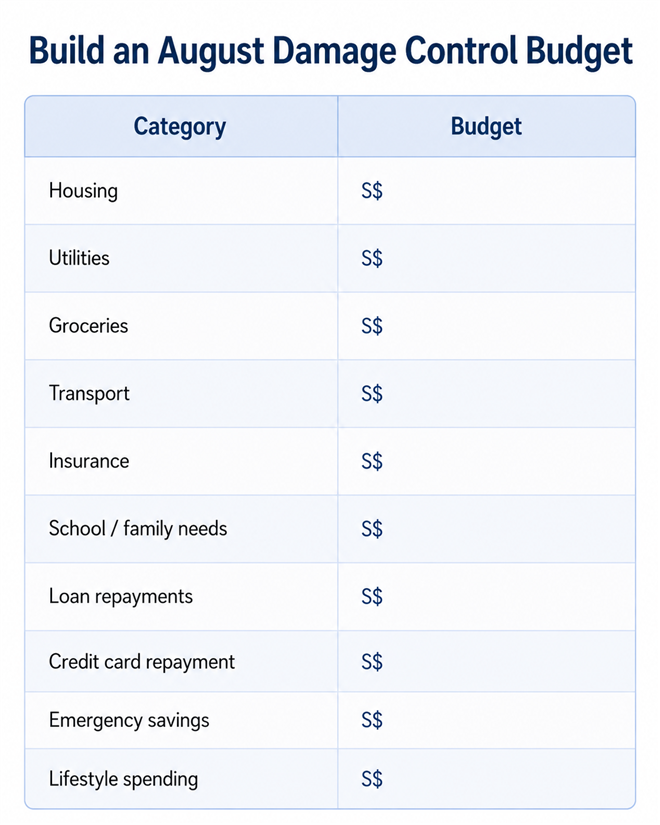
Put credit card repayment into the budget as a proper line item. Do not treat it as whatever is left at the end of the month, because usually what is left is vibes and two receipts.
Also remember that household electricity tariffs increased by 17.0% before GST for July to September 2026, so households may need to allow more room for utility bills during this quarter.
6. Use Any August Payouts Wisely
Some Singaporeans may receive support in August 2026. MOF announced that about 1.5 million eligible adult Singaporeans will receive up to S$850 in GSTV – Cash, while about 710,000 eligible seniors will receive up to S$450 in MediSave top-ups.
If you receive GSTV Cash, avoid treating it as bonus shopping money if you are carrying credit card debt.
A practical allocation may look like this:
| Use |
Possible Amount |
| Credit card repayment |
S$150–S$400 |
| Groceries / essentials |
S$100–S$250 |
| Emergency fund |
S$100–S$300 |
| Utilities or overdue bills |
S$100–S$200 |
| Small treat |
S$30–S$80 |
The exact amount depends on your household situation. The key idea is simple: reduce pressure first, enjoy after.
7. Choose a Repayment Strategy
If you have more than one credit card balance, choose a repayment method.
Option A: Highest-Interest First
Pay the most towards the card with the highest interest rate while making minimum payments on the rest.
This may save more interest over time.
Option B: Smallest Balance First
Pay off the smallest balance first while making minimum payments on the rest.
This gives a faster psychological win and can help build momentum.
Option C: Due-Date Priority
If cashflow is very tight, pay the cards with the earliest due dates first to avoid late payment issues.
MoneySense recommends listing debts clearly, understanding what you owe, and taking active steps to repay debt as quickly as possible. It also suggests seeking help early if debt becomes difficult to manage.
The best method is the one you can follow consistently.
8. Cut the Spending That Created the Bill
A repayment plan only works if you also reduce the spending that caused the balance.
Look for the top 5 categories in your July statement.
Common ones:
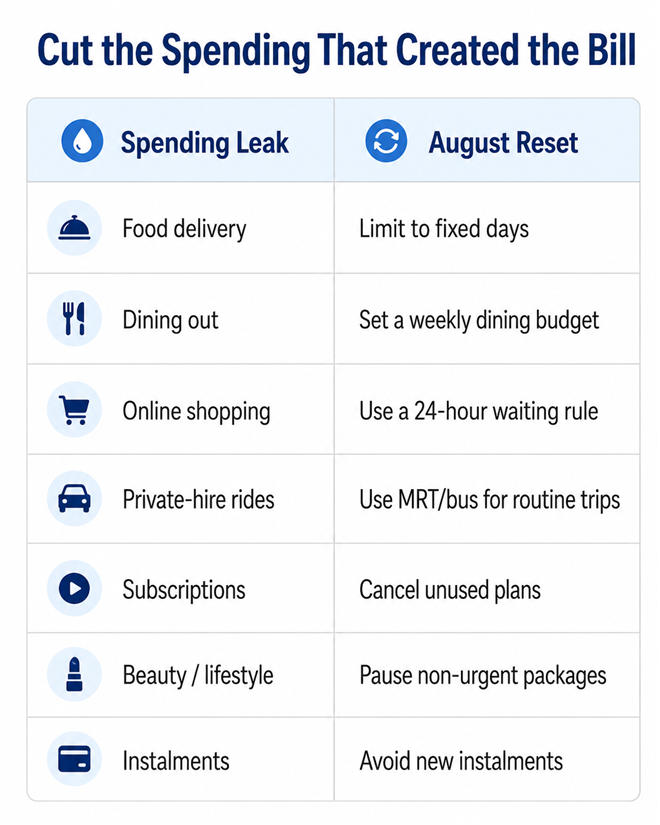
You do not need to cut every joy from your life. But you do need to stop the habits that are quietly charging rent on your future income.
9. Avoid New Instalment Plans
Instalments can make purchases feel affordable because the monthly amount looks small.
But if you are already dealing with a high credit card bill, new instalments can make cashflow worse.
Avoid adding instalments for:
- Gadgets
- Furniture
- Travel
- Beauty packages
- Non-urgent shopping
- Home décor
- Lifestyle upgrades
Before taking any new instalment plan, ask:
- Do I need this now?
- Can I pay in full?
- How many instalments do I already have?
- Will this affect my ability to repay my card?
- What is the total cost?
If you cannot comfortably pay your current card bill, the answer to most new instalments should be: not now, babe/bro.
10. Do Not Use Another Credit Source Without a Clear Plan
When credit card bills feel heavy, some people look for quick solutions: another card, a cash advance, buy-now-pay-later, personal loan, or fast loan.
Borrowing is not automatically wrong, but it can become dangerous if it is used to cover repeated overspending.
Before considering any loan, ask:
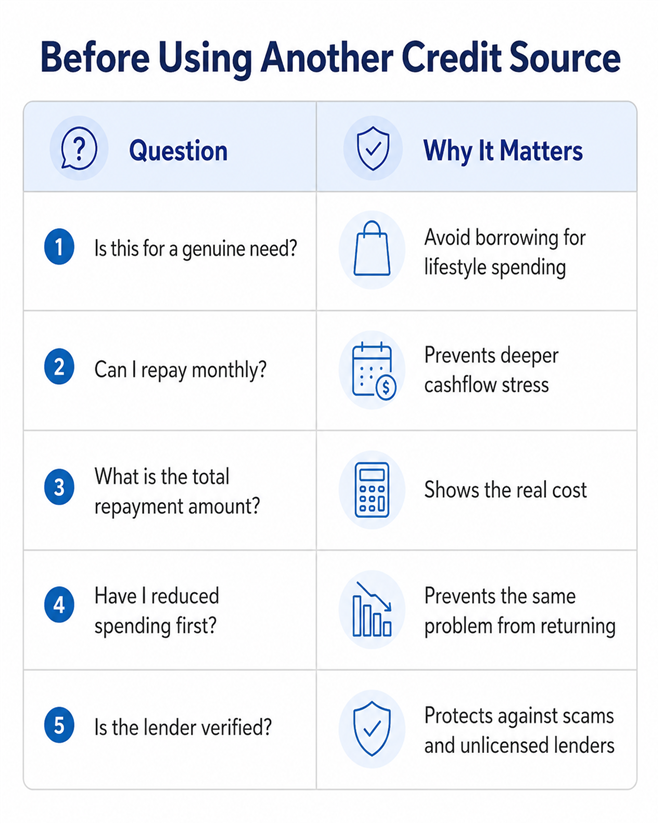
Licensed moneylenders in Singapore are only allowed to advertise through business or consumer directories, their own websites, and advertisements placed within or on the exterior of their approved business premises. Borrowers should be cautious of loan offers received through SMS, WhatsApp, Telegram, phone calls, or social media.
If a loan offer appears suddenly in your messages, that is not convenience. That is a red flag wearing perfume.
11. Speak to Someone Early If the Debt Feels Unmanageable
If your credit card debt is already affecting your sleep, bills, family needs, or ability to pay essentials, do not wait.
Signs you may need help:
- You are paying only minimum amounts every month
- You are using one card to pay another
- You are borrowing to repay debt
- You are missing due dates
- You feel anxious whenever statements arrive
- Your debt is growing despite payments
MoneySense advises people with debt difficulties to take action early and notes that Credit Counselling Singapore can help those facing debt problems.
Getting help early is not embarrassing. Letting debt quietly become a monster under the bed is the expensive part.
12. Create a 30-Day Credit Card Reset Plan
Here is a simple reset plan for August.
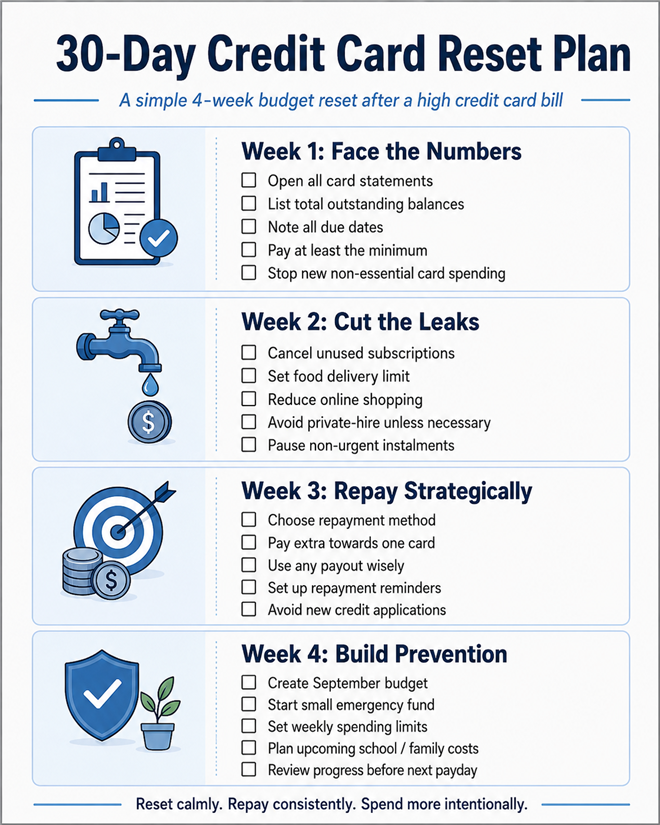
A reset does not need to be dramatic. It just needs to be honest and consistent.
What Not to Do After a Big Credit Card Bill
Avoid these mistakes:
- Ignoring the statement
- Paying only the minimum if you can afford more
- Continuing to spend as usual
- Taking new instalments
- Using another card to cover the first card
- Borrowing without a repayment plan
- Responding to unsolicited loan messages
- Waiting until multiple payments are missed
The goal is to stop the bill from growing before it becomes harder to manage.
Final Thoughts
A high credit card bill after July does not mean you have failed financially. It means your budget needs attention before the balance becomes heavier.
Start by opening every statement, listing what you owe, paying more than the minimum where possible, and pausing new card spending. Then build a realistic August budget, cut money leaks, and use any available support wisely.
Credit cards are helpful tools when managed well. But when balances roll over, they can quickly become a source of stress.
The best time to reset is before things get worse.
August is your chance to stop the snowball, clean up July’s spending, and step into the next month with more control.
Your future self is already clapping politely.